
By Dr. Anand Ramamurthy
Is Surgical Gastroenterology the Right Super-Specialty After General Surgery?
For decades, General Surgery has been one of the most respected and versatile branches of medicine. However, with rapid advancements in surgical techniques, technology, and patient expectations, the landscape of surgical practice has evolved significantly. Today, many surgeons are choosing to pursue super-specialization rather than practicing as general surgeons throughout their careers.
One of the most sought-after super-specialties emerging from General Surgery is Surgical Gastroenterology. For postgraduate surgical trainees and young surgeons planning their careers, understanding the scope, training pathway, and future prospects of Surgical Gastroenterology is essential before making an informed decision.
The Changing Face of General Surgery
In modern healthcare, especially in metropolitan cities and tertiary care hospitals, the role of a traditional general surgeon has become increasingly specialized. Many established surgeons who initially trained in General Surgery have redefined their practices by focusing on laparoscopic surgery, minimal access surgery, gastrointestinal surgery, colorectal surgery, or hepatobiliary procedures.
This shift has occurred because patients increasingly seek specialists for specific diseases and procedures. As a result, surgeons often pursue advanced training to develop expertise in focused areas of surgical care.
While General Surgery remains the foundation of surgical practice, super-specialization allows surgeons to handle more complex conditions and advanced procedures that require dedicated training.
What is Surgical Gastroenterology?
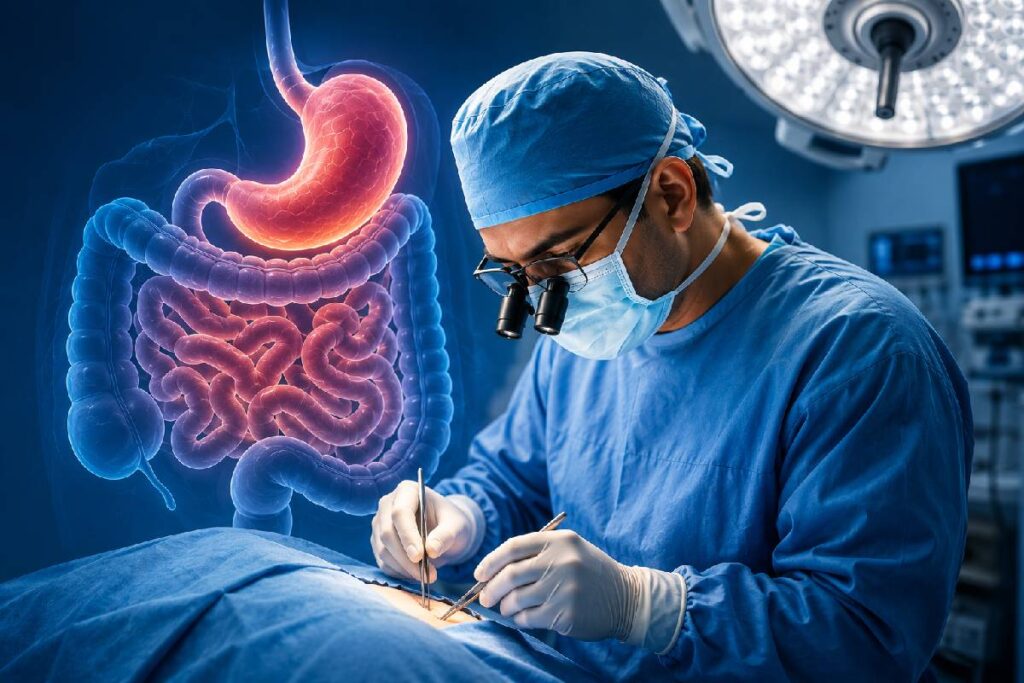
Surgical Gastroenterology is a super-specialty that focuses on the surgical management of diseases affecting the digestive system. This includes conditions involving the esophagus, stomach, small intestine, colon, rectum, liver, pancreas, gallbladder, and biliary tract.
The field combines traditional surgical principles with advanced minimally invasive techniques, robotic surgery, and organ transplantation procedures. Surgeons trained in Surgical Gastroenterology manage a wide range of conditions, including gastrointestinal cancers, inflammatory bowel diseases, pancreatic disorders, liver diseases, and complex abdominal surgeries.
Although there is considerable overlap between General Surgery and Surgical Gastroenterology, the latter offers more focused expertise and exposure to complex gastrointestinal conditions.
What Makes Surgical Gastroenterology Unique?
One of the major factors that distinguishes Surgical Gastroenterology from General Surgery is its involvement in highly specialized areas such as Hepatobiliary Pancreatic (HPB) Surgery and Abdominal Organ Transplantation.
Hepatobiliary Pancreatic (HPB) Surgery
HPB surgery focuses on diseases affecting the liver, pancreas, gallbladder, and biliary system. These procedures are often technically demanding and require extensive training and experience.
Examples include:
- Liver tumor resections
- Pancreatic cancer surgeries
- Complex bile duct reconstructions
- Gallbladder cancer surgeries
- Major liver resections
HPB surgery has become one of the most rapidly advancing areas within Surgical Gastroenterology, offering opportunities to manage some of the most challenging surgical conditions.
Abdominal Organ Transplantation
Another highly specialized branch within Surgical Gastroenterology is organ transplantation. Liver transplantation, in particular, requires dedicated expertise, multidisciplinary coordination, and advanced surgical skills.
Transplant surgeons play a crucial role in evaluating patients, performing transplant procedures, and managing post-operative care. Due to the complexity of these surgeries, additional fellowship training is generally required after completing super-specialty education.
Training Pathway in Surgical Gastroenterology
The journey toward becoming a specialist in Surgical Gastroenterology requires significant commitment and structured training.
The typical pathway includes:
- MBBS
- MS General Surgery or DNB General Surgery
- MCh Surgical Gastroenterology or DNB Surgical Gastroenterology (3 years)
- Fellowship training in HPB Surgery, Liver Transplantation, or Advanced Minimal Access Surgery (usually 1–2 years)
The three-year MCh or DNB program provides extensive exposure to gastrointestinal diseases, advanced laparoscopic procedures, gastrointestinal oncology, HPB surgery, and transplant-related principles.
However, surgeons interested in liver transplantation or advanced minimally invasive procedures often pursue additional fellowship training to acquire specialized technical skills.
Career Opportunities After Surgical Gastroenterology
The demand for specialists in Surgical Gastroenterology continues to grow due to increasing rates of gastrointestinal cancers, liver diseases, obesity-related disorders, and the expanding adoption of minimally invasive surgical techniques.
Career opportunities include:
- Academic medical institutions
- Government hospitals
- Corporate healthcare organizations
- Liver transplant centers
- Advanced laparoscopic surgery units
- Specialized gastrointestinal hospitals
With experience, surgeons may also establish independent practices focusing on gastrointestinal and minimally invasive surgery.
Are There Any Pros and Cons?
There are no universal advantages or disadvantages when choosing Surgical Gastroenterology as a career path. The decision largely depends on individual interests, professional goals, and preferred practice settings.
For surgeons passionate about gastrointestinal diseases, advanced surgery, oncology, HPB procedures, or transplantation, the specialty offers intellectually stimulating and technically rewarding work.
However, the training pathway is long and demanding. Building expertise often requires additional years of fellowship training and practice in high-volume centers.
The ideal choice depends on factors such as:
- Personal interest in gastrointestinal surgery
- Long-term career goals
- Desired work-life balance
- Availability of training opportunities
- Intended practice location
Final Thoughts
Surgical Gastroenterology has emerged as one of the most dynamic and rapidly evolving surgical super-specialties. While General Surgery remains the cornerstone of surgical education, modern surgical practice increasingly favors focused expertise in complex disease areas.
For surgeons interested in advanced gastrointestinal procedures, HPB surgery, liver transplantation, and minimally invasive techniques, Surgical Gastroenterology offers a challenging yet highly rewarding career path. Ultimately, the decision should be guided by genuine interest, aptitude, and long-term professional aspirations rather than perceived trends alone.